Demystifying Web3: The Decentralized Web
The landscape of the internet is shifting. We’ve journeyed from the static read-only world of Web1 and the interactive, social-driven era of Web2, and now we stand on the brink of Web3. But what exactly is Web3, and why does it matter?
At its core, Web3 is the vision for a decentralized and open web, built on top of blockchain technologies. This represents a significant evolution from the centralized web we know today, dominated by a few major players. In Web3, users are in control, with greater ownership of their data and digital assets.
The Problem: The Centralized Web
Web2, for all its innovations, has created a centralized landscape. A few massive companies control vast amounts of user data, raising privacy and security concerns. The internet has become a gated garden where users are the product, and their data is monetized without their full control or benefit. Content creators, too, often struggle to capture the full value of their work.
The Solution: Web3 and Decentralization
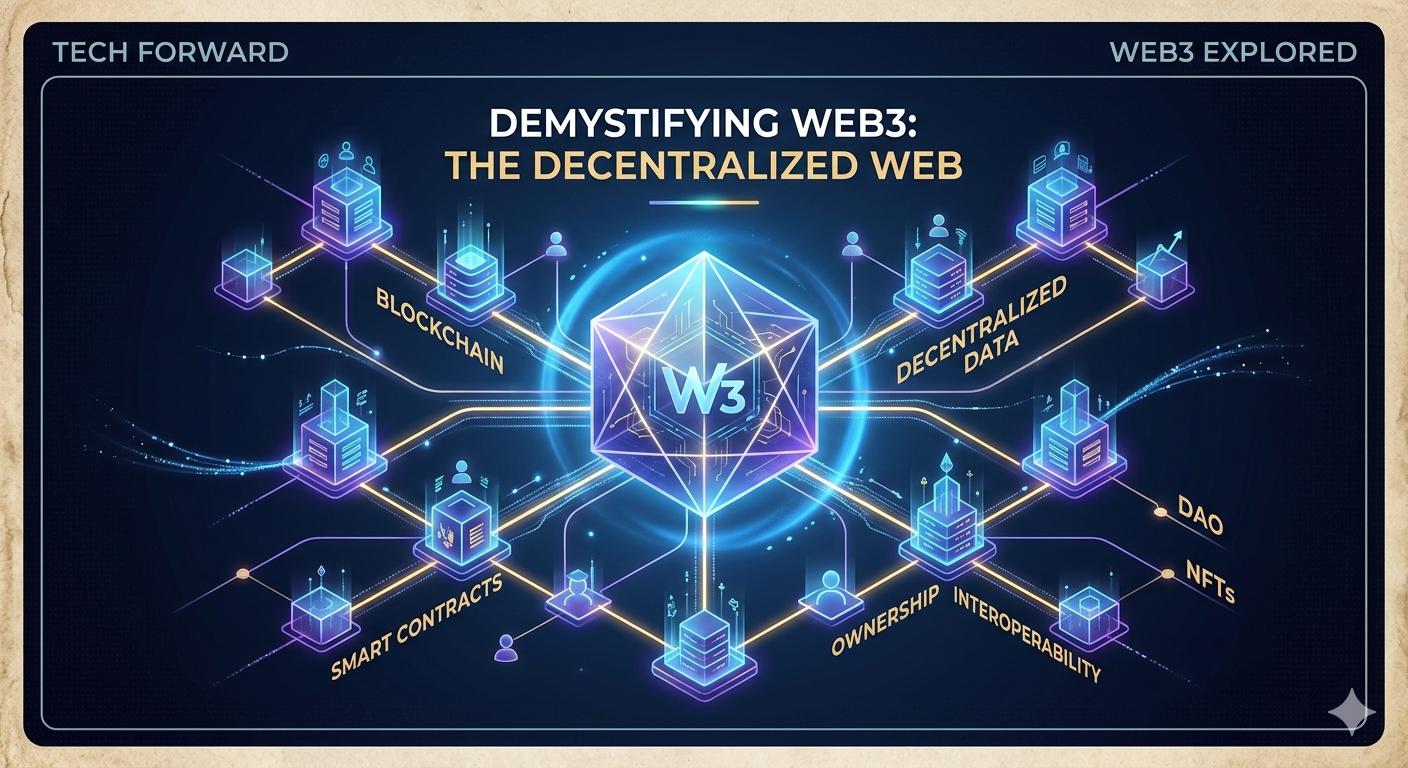
Web3 aims to address these issues by building on the principles of decentralization, transparency, and trust. Let’s explore the key components that make this vision a reality, as visualized in our infographic above.
1. Blockchain: The Trust Layer
The foundation of Web3 is blockchain technology. This decentralized ledger records transactions across a network of computers, making it incredibly secure and tamper-proof. Unlike traditional databases controlled by a single entity, blockchain operations are verified and validated by a wide community, ensuring transparency and trust.
2. Decentralized Data: Giving Control to Users
One of the defining features of Web3 is the concept of decentralized data. Instead of storing your information on a single company’s server, your data can be distributed across a network of nodes, giving you, the user, greater control and ownership. This shift is crucial for enhancing privacy and reducing the risk of massive data breaches.
3. Smart Contracts: The Code that Executes Itself
In Web3, traditional intermediaries like lawyers or brokers are often replaced by smart contracts. These are self-executing contracts with the terms of the agreement directly written into lines of code. The code automatically executes and enforces the agreement when predefined conditions are met. This increases efficiency, reduces costs, and ensures that transactions are transparent and immutable.
4. Ownership: A New Era for Digital Assets
Web3 introduces true ownership of digital assets. Through technologies like NFTs (Non-Fungible Tokens), unique digital items such as artwork, music, in-game items, and virtual real estate can be distinctly identified and owned. This opens up new possibilities for creators to monetize their work and for users to build and trade their digital identity and possessions.
5. Interoperability: Breaking Down the Silos
In the centralized web, different platforms and applications operate in silos. For example, your achievements in one game rarely translate to another. Web3 champions interoperability, aiming to create a seamless experience where assets, data, and applications can work together across different platforms. Imagine a virtual item you buy in one game, and you can truly use it in another!
6. DAO: Decentralized Autonomous Organizations
Another revolutionary concept in Web3 is the DAO. This is an organization that is run by a community of token holders, rather than a centralized management team. Decision-making is handled collectively through voting, with the results executed automatically via smart contracts. This fosters a more democratic and transparent model of governance.
What Lies Ahead for Web3?
The potential of Web3 is vast, with implications across many industries:
-
Finance (DeFi): Decentralized finance offers open, permissionless financial services like lending, borrowing, and trading without traditional intermediaries.
-
Gaming: Players can have true ownership of in-game assets, trade them across marketplaces, and even shape the development of the games themselves.
-
Content Creation: Web3 empowers creators to build direct relationships with their audience and directly monetize their work, bypassing platforms that take large cuts.
-
Social Media: Decentralized social networks offer alternatives to traditional platforms, with users having greater control over their data, content, and the rules of the community.
While Web3 is still in its early stages and faces challenges such as scalability, regulatory hurdles, and user adoption, the promise of a decentralized, user-centric web is incredibly exciting. As the technology continues to mature, we are on the precipice of a more open, equitable, and transparent internet. Demystifying Web3 is the first step to becoming part of this new era of innovation and empowerment.